Blog
How we made "Where does the fat go?"
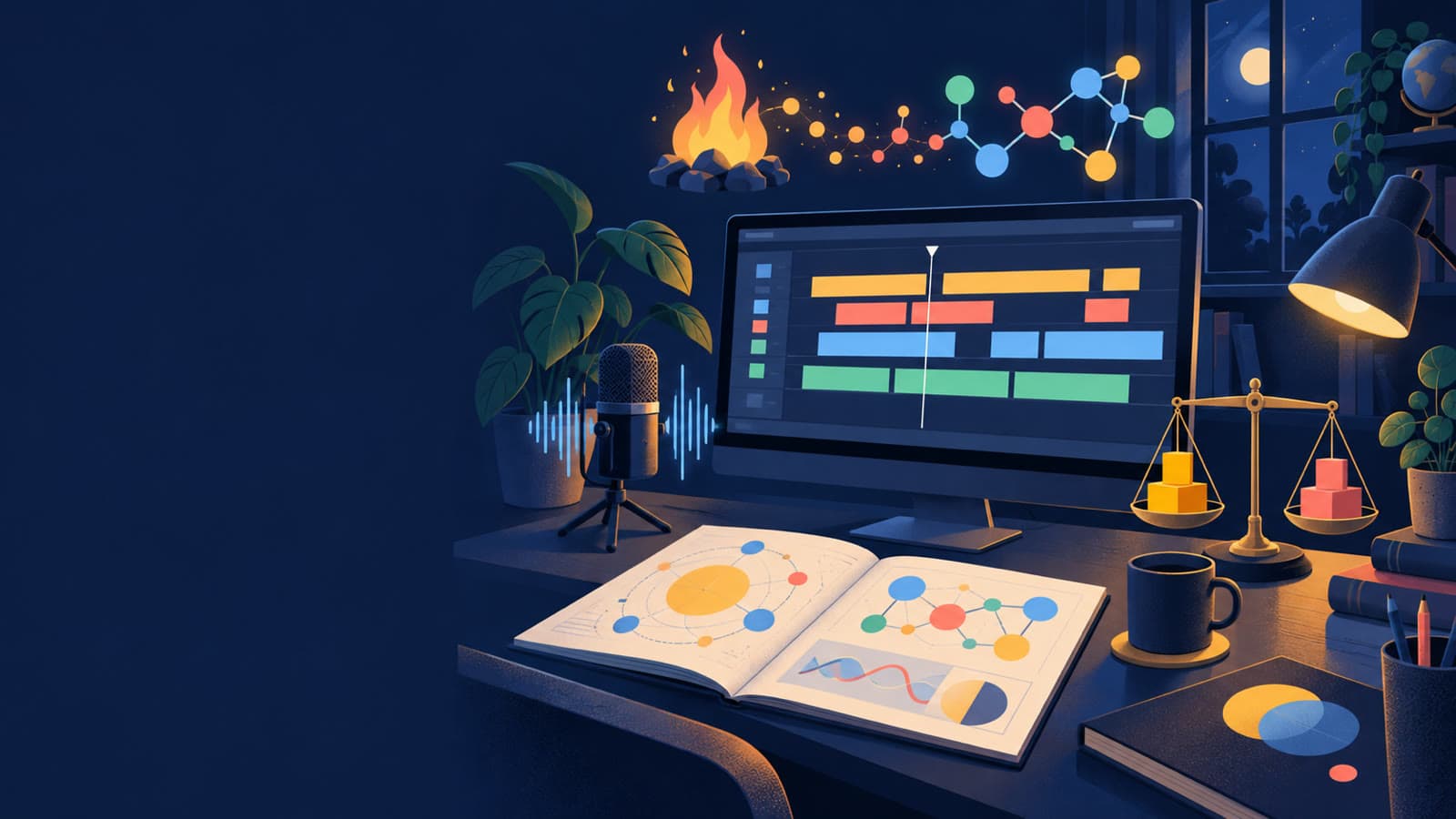
Illustration made with AI (OpenAI)
A campfire first, the chemistry second, every number checked against the paper, animation built in code, and a cloned voice we tell you about.
By Science for Big BabiesPublished 2 min read
Our first published episode asks: when you lose weight, where does the fat go? Here's how it was made, including the parts that aren't glamorous.
A campfire before the chemistry
Every episode starts with an everyday comparison before any mechanism. For fat, that's a campfire. A log burns down to a small heap of ash, about 1% of firewood's dry weight, and the rest goes into the air as carbon dioxide and water. Your fat leaves the same way.
Then the video zooms in: one fat molecule, three enzymes, the mitochondria, the lungs. And it says where the campfire picture breaks: there's no flame, there's no ash, and your fat cells shrink instead of disappearing. An analogy that never admits its limits teaches the wrong thing.
Sources before script
No episode goes into production until it has at least two primary sources: papers or official institutions, not blog posts. This one rests on the 2014 BMJ paper by Ruben Meerman and Andrew Brown, plus textbooks, a Nature study on fat cells, exercise trials and a medical encyclopedia. Every claim in the script is matched to a source in a table before anyone records a word.
That process changed the episode:
- An early draft described the reference person as 75 kg. The paper says 70 kg, so we fixed it.
- A press release says more than half of 150 doctors, dietitians and personal trainers thought fat turns into energy. That number isn't in the paper itself, so it isn't in the video.
- The BMJ published a correction to the paper in December 2014, about one number in a figure. We checked: it's a number we never use. The full story is in How we know on the episode page.
- Before release, a person compared our numbers line by line with the published paper.
Our own animation
Every frame is our own animation, built in code. There's no stock footage, and we didn't reuse the paper's figures, which are under a non-commercial licence. That's why the molecule, the scale and the fat cells all look the same across the short, the long video and this site.
The voice is a clone, and we'd rather say so
The narration is the channel creator's own voice, but not every line was read into a microphone. We use a clone of that same voice, made from the creator's own recordings, with consent. It never imitates anyone else. Lines the software flagged for a second listen were checked by a person before anything was published.
AI assistants also helped us find sources, draft the script and write the animation code. A person checked every number against its source, and nothing was published without human approval. More on that on our about page.
What came out of it
A 9-minute video, a 55-second short, an audio version, a full article with every source, a mini course, a quiz and a small game, Pack the atoms out. If you spot a mistake in any of them, here's how we fix it.
Our next question: where does a tree's wood come from?